Extreme Heat and El Niño Preparedness: How Families Can Survive Dangerous Temperatures in the Southern Hemisphere
A civilian guide to preparing for heatwaves, water stress, power failures, wildfire risk, food disruption, and family protection during a warming climate.
El Niño conditions are expected to develop from mid-2026, increasing the risk of abnormal heat, drought, fire weather, and rainfall disruption in parts of the Southern Hemisphere. Combined with global warming, extreme heat is becoming one of the most serious threats to civilian safety. This guide explains how families can prepare their homes, protect children and elderly relatives, manage water and power failures, reduce heat exposure, and use Elysian as a decision-support tool during climate-driven crises.
Extreme Heat and El Niño Preparedness: How Families Can Survive Dangerous Temperatures in the Southern Hemisphere
Subtitle
A civilian guide to preparing for heatwaves, water stress, power failures, wildfire risk, food disruption, and family protection during a warming climate.
Summary
El Niño conditions are expected to develop from mid-2026, increasing the risk of abnormal heat, drought, fire weather, and rainfall disruption in parts of the Southern Hemisphere. Combined with global warming, extreme heat is becoming one of the most serious threats to civilian safety.
This guide explains how families can prepare their homes, protect children and elderly relatives, manage water and power failures, reduce heat exposure, and use Elysian as a decision-support tool during climate-driven crises.
Post
Extreme heat is no longer a distant climate warning.
It is becoming a direct civilian-protection problem.
Across the Southern Hemisphere, families may face hotter summers, longer heatwaves, water shortages, wildfire risk, pressure on electricity grids, food-price instability, and dangerous outdoor conditions. When El Niño develops, these risks can intensify in specific regions by shifting rainfall, raising temperatures, and increasing drought or fire conditions in vulnerable areas.
But the danger is not only El Niño.
The deeper problem is that El Niño now happens on top of a warmer planet.
A hot year in the past was dangerous. A hot year in a climate already affected by global warming can become a public-health emergency.
For families, the question is practical:
How do we keep people alive, hydrated, cool, informed, and functional when temperatures become extreme?
Understand the Real Threat of Extreme Heat
Extreme heat is dangerous because it attacks the body quietly.
Unlike storms, floods, or fires, heat does not always look dramatic. The sky may be clear. The street may look normal. People may still go to work, take children to school, exercise, travel, or wait outside.
But inside the body, heat stress can escalate quickly.
When the body cannot cool itself, temperature regulation begins to fail. This can lead to dehydration, heat exhaustion, confusion, fainting, organ damage, and heatstroke.
Heatstroke is a medical emergency.
The most vulnerable people are children, elderly adults, pregnant women, outdoor workers, people with chronic illness, people taking certain medications, people without air conditioning, and people living in dense urban areas with poor ventilation.
Urban heat is especially dangerous because concrete, asphalt, vehicles, buildings, and limited vegetation trap heat. This is known as the urban heat island effect. A city can remain hot even after sunset, making it difficult for the body to recover overnight.
In a heat crisis, nighttime temperature matters as much as daytime temperature.
If the body never gets a chance to cool down, risk increases every day.
Prepare Your Home Before the Heatwave
Your home should become your first heat shelter.
Before extreme temperatures arrive, identify the coolest room in the house. It may be on the lower floor, away from direct sunlight, or on the side of the building that receives less afternoon heat.
Prepare that room as a family cooling zone.
Use curtains, blinds, shutters, reflective window covers, or temporary shade to reduce sun exposure. Keep windows closed during the hottest hours if outside air is hotter than inside air. Ventilate early in the morning, late in the evening, or at night when temperatures drop.
Reduce internal heat.
Avoid using ovens during peak heat. Turn off unnecessary electronics. Use fans carefully. Fans can help when air temperature is moderate, but during extreme heat they may become less effective if the air is too hot and dry.
If you have air conditioning, use it strategically. Cool one room rather than trying to cool the entire home. Keep doors closed. Clean filters. Prepare for the possibility of power cuts.
If you do not have air conditioning, plan alternatives now.
Know where the nearest public cooling spaces are: libraries, community centers, shopping centers, public buildings, shaded parks, transport stations, or official cooling shelters. During a severe heatwave, leaving home for a cooler place may be safer than staying inside an overheated apartment.
Build a Heat Survival Kit
A heat survival kit is different from a normal emergency bag.
It should focus on hydration, cooling, power backup, medical needs, and communication.
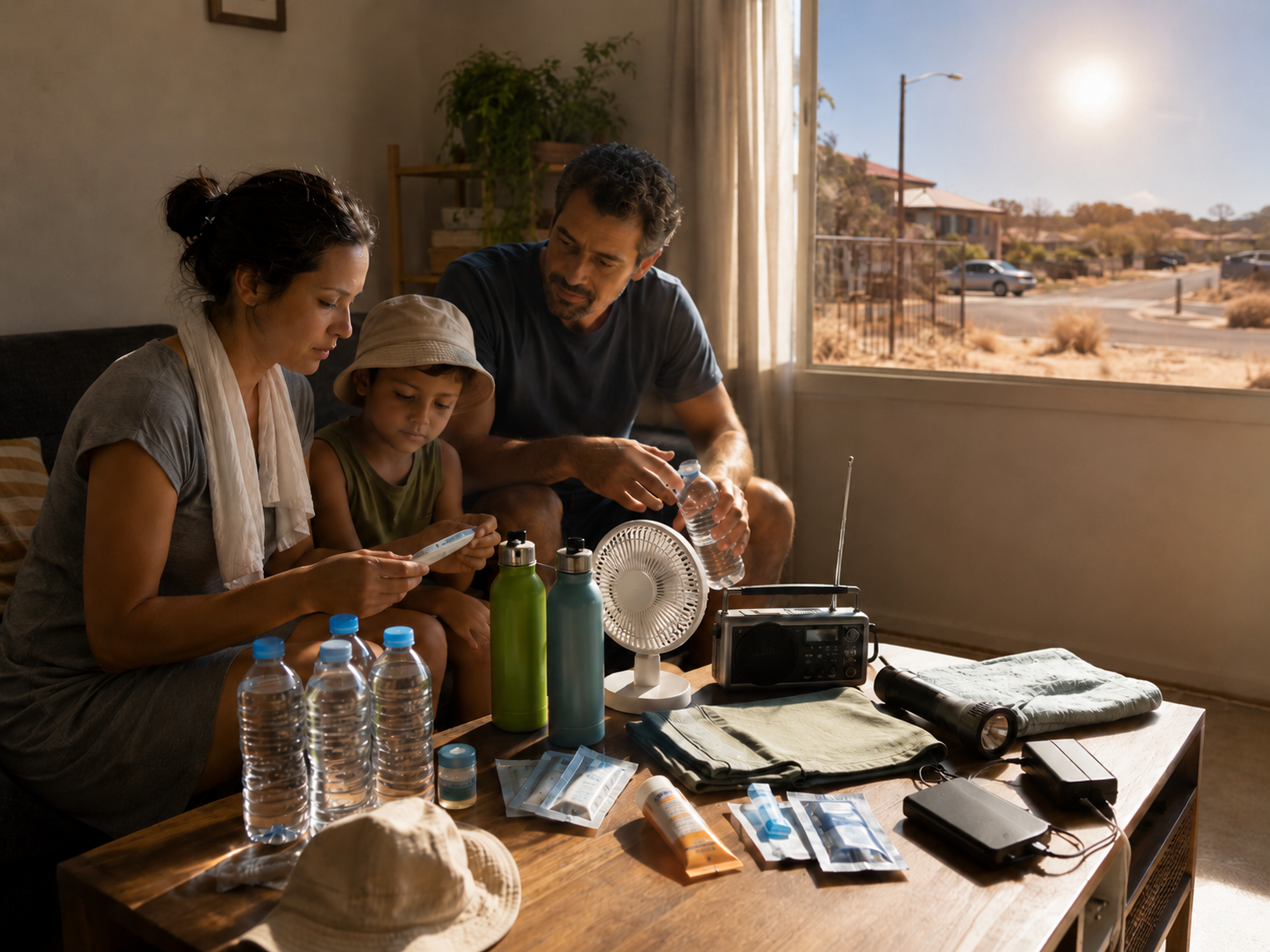
A family heat kit should include:
- Drinking water
- Oral rehydration salts or electrolyte solution
- Reusable water bottles
- Lightweight loose clothing
- Hats and sunglasses
- Sunscreen
- Cooling towels or wet cloths
- Spray bottle
- Thermometer
- Power banks
- Battery-powered fan, if available
- Flashlights
- Essential medication
- First aid supplies
- Printed emergency contacts
- Pet water and supplies
Do not wait until the heatwave begins to buy water, batteries, or medication. During extreme weather, shops may run out quickly and delivery services may be delayed.
For families with babies, include formula, diapers, wipes, and extra water for preparation and hygiene.
For elderly relatives, prepare medication lists, doctor contacts, mobility support, and a daily check-in routine.
For pets, remember that heat can kill quickly. Animals need shade, water, ventilation, and protection from hot pavement.
Manage Water Like a Critical Resource
During extreme heat, water becomes both a health resource and a planning resource.
Families should store drinking water before the hottest period begins. The amount depends on household size, climate, health needs, and local reliability of water systems, but the principle is simple: do not depend entirely on daily supply during a heat crisis.
Hydration should be regular, not reactive.
Do not wait until you feel very thirsty. Children and older adults may not recognize thirst early enough. Create family hydration routines:
- Morning
- Midday
- Afternoon
- Evening
Watch urine color, fatigue, headache, dizziness, dry mouth, and confusion. These can be signs of dehydration or heat stress.
Avoid excessive alcohol during heatwaves. Be careful with heavy meals. Choose lighter foods with water content when possible.
If water restrictions are announced, follow them early. Heat crises often combine household demand, agricultural stress, drought, and infrastructure pressure.
In a climate emergency, water discipline protects the whole community.
Change Your Daily Schedule
During extreme heat, normal routines can become dangerous.
The safest strategy is to move important activity away from peak heat.
Avoid outdoor tasks during the hottest part of the day. Exercise early in the morning or not at all during severe heat alerts. Move shopping, walking, commuting, and errands to cooler hours when possible.
Children should not play outside during dangerous heat. Schools, sports clubs, and families should take heat warnings seriously. A football field, playground, or asphalt court can become unsafe very quickly.
Outdoor workers need special protection:
- Shade
- Rest breaks
- Hydration
- Adjusted schedules
- Monitoring for symptoms
Heat preparedness is not only about supplies. It is about changing behavior before the body reaches its limit.
Recognize Heat Illness Early
Families should know the difference between heat discomfort and medical danger.
Possible signs of heat exhaustion include:
- Heavy sweating
- Weakness
- Dizziness
- Headache
- Nausea
- Muscle cramps
- Fast pulse
- Cool or clammy skin
- Extreme fatigue
The response should be immediate:
- Move the person to a cooler place
- Loosen clothing
- Cool the body with wet cloths or water
- Provide small sips of water if the person is conscious
- Let the person rest
Heatstroke is more serious.
Warning signs may include:
- Confusion
- Collapse
- Very high body temperature
- Hot skin
- Seizures
- Loss of consciousness
- Abnormal behavior
Heatstroke requires emergency medical help.
Do not wait to see if it improves. Cooling must begin immediately while help is being contacted.
In a family crisis, knowing these signs can save a life.
Prepare for Power Failures
Extreme heat can overload electricity grids.
When millions of people use cooling systems at the same time, power demand rises. Heat can also damage infrastructure. Wildfires, storms, or drought-related problems can increase the risk of outages.
A blackout during a heatwave is more dangerous than a normal blackout.
Prepare backup power for phones, radios, medical devices, fans, and lighting. Keep power banks charged before the heat arrives. If someone depends on electrically powered medical equipment, create a specific backup plan.
Know where you can go if your home becomes dangerously hot without electricity.
A friend’s house, hotel, public cooling center, workplace, community building, or official shelter may become part of your survival plan.
Do not use generators indoors or near windows. Carbon monoxide can kill silently.
Do not sleep in a closed car with the engine running for cooling.
Power failure planning must be part of heat planning.
Prepare for Wildfire and Smoke Risk
In many Southern Hemisphere regions, El Niño can increase drought and fire risk, depending on local climate patterns.
Heat, wind, dry vegetation, and low humidity can create dangerous fire conditions. Even families far from flames may be affected by smoke.
Prepare for wildfire risk early.
Clear dry vegetation near the home if applicable. Keep gutters and balconies free of flammable material. Know evacuation routes. Keep fuel or transport options ready if authorities warn of fire danger.
Smoke can make outdoor air unsafe.
Families should prepare masks where appropriate, close windows when smoke is heavy, reduce indoor air pollution, and use air filtration if available. People with asthma, heart disease, respiratory conditions, children, and elderly adults are especially vulnerable.
During smoke events, outdoor exercise can become dangerous.
Do not wait until you see flames. In wildfire conditions, evacuation decisions may need to happen quickly.
Protect Food and Medicine
Extreme heat affects food safety.
Power outages can spoil refrigerated food. High indoor temperatures can damage medicine. Transport delays can affect supply chains. Drought and heat can increase food prices and reduce availability of certain products.
Keep a small reserve of shelf-stable food that does not require refrigeration or cooking.
Useful items include:
- Canned food
- Rice or pasta
- Oats
- Nuts
- Dried fruit
- Crackers
- Nut butter
- Powdered milk
- Ready-to-eat meals
- Baby food, if needed
- Pet food
Check medication storage instructions. Some medicines lose effectiveness if exposed to excessive heat. If necessary, ask a pharmacist how to protect temperature-sensitive medication during heatwaves or blackouts.
Food and medicine planning is not panic. It is continuity.
Build a Family Heat Protocol
Families should not improvise every day during extreme heat.
Create a simple protocol.
When a heat alert is issued:
- Fill water bottles
- Charge phones and power banks
- Prepare the coolest room
- Close blinds before peak sun
- Check on elderly relatives
- Cancel unnecessary outdoor activity
- Prepare light meals
- Review symptoms of heat illness
- Identify the nearest cooling location
- Monitor official alerts
For children, explain the rules clearly:
- No outdoor play during peak heat
- Drink water even without thirst
- Tell an adult if dizzy, tired, sick, or confused
- Stay in shaded or cooled areas
- Do not wait inside parked cars
For elderly relatives, create a check-in schedule. Heat can impair judgment, and people may underestimate danger.
Use Elysian as a Climate-Crisis Decision Tool
Elysian can help families turn climate alerts into practical decisions.
During extreme heat, families do not only need information. They need interpretation.
Ask:
- What does this warning mean for my household?
- Should we stay home or move to a cooler place?
- What should we prepare today?
- Which family members are most vulnerable?
- What supplies are missing?
- What happens if power fails?
- How do we protect children, pets, and elderly relatives?
- What route should we use if wildfire risk increases?
Elysian can support preparedness by helping families create:
- Heatwave checklists
- Emergency routines
- Supply plans
- Evacuation logic
- Shelter-in-place strategies
- Communication protocols
The goal is not to replace official alerts.
The goal is to translate risk into action.
Good information tells you what is happening.
Civilian intelligence tells you what to do next.
Think Beyond One Heatwave
Extreme heat preparedness is not a one-week project.
Global warming means families should treat heat resilience as part of long-term household planning.
This may include:
- Better insulation
- External shading
- Lighter roof materials
- Ventilation improvements
- Trees or balcony shading
- Efficient cooling
- Water storage
- Neighborhood support networks
- Emergency savings for relocation during severe events
Cities also need adaptation:
- Cooling centers
- Tree cover
- Water access
- Heat-safe schools
- Worker protection
- Public warning systems
- Support for vulnerable populations
But families cannot wait for perfect infrastructure.
Household preparation is the first layer of protection.
Final Thought
El Niño may come and go.
Global warming remains.
That means extreme heat will continue to be one of the most important survival challenges for families in the Southern Hemisphere and beyond.
The families who prepare early will have more options. They will know how to cool the home, protect water, recognize heat illness, support vulnerable relatives, manage blackouts, avoid dangerous movement, and make decisions calmly.
Heat does not need to look dramatic to be deadly.
Preparation turns invisible danger into visible action.
In a warming world, survival begins before the temperature rises.