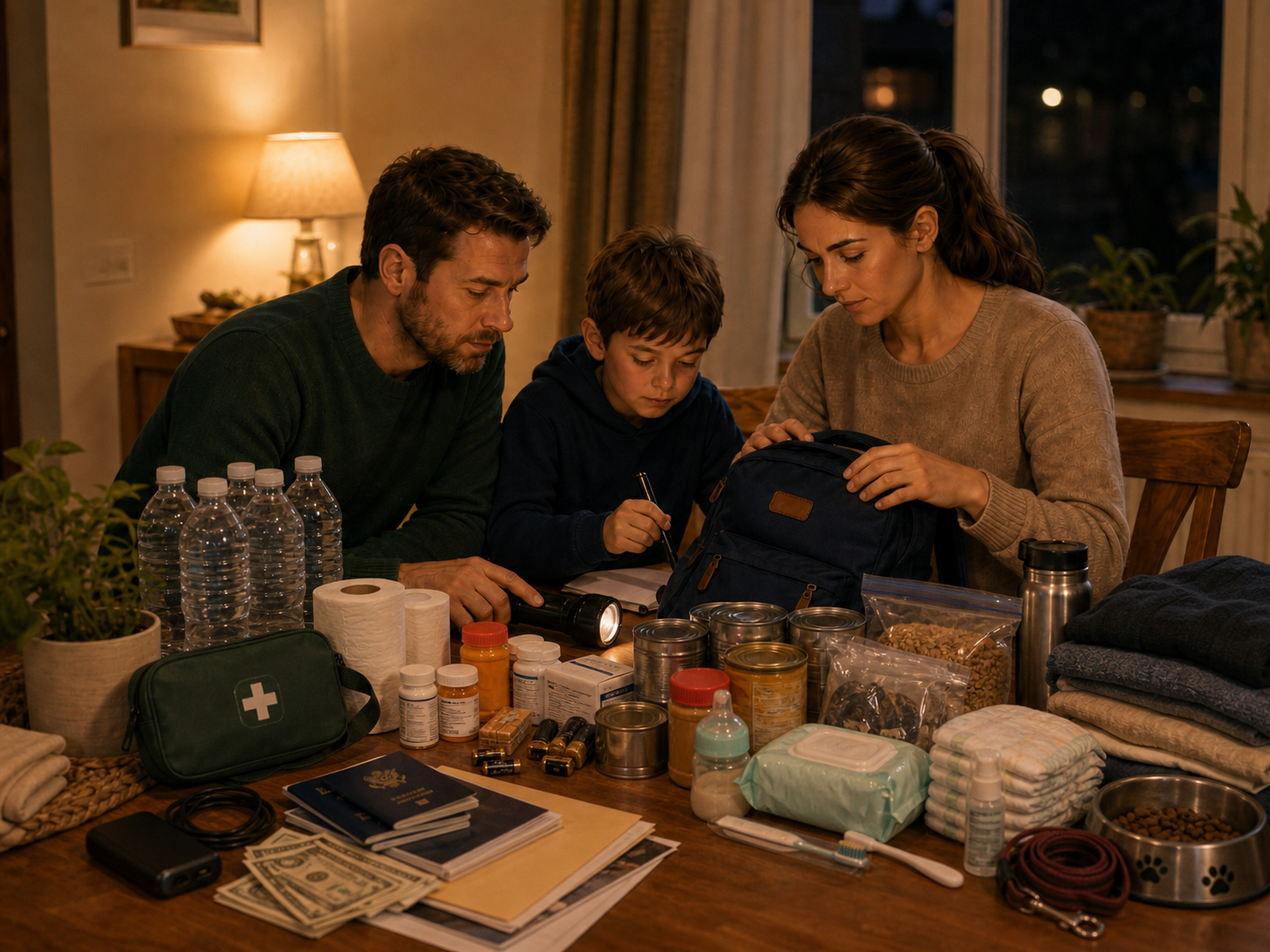
Prepping for Wartime: A Civilian Guide to Readiness Without Panic
How families can prepare for wartime disruption through supplies, documents, communication, evacuation planning, and calm decision-making.
Wartime preparation is not about paranoia or militarization. For civilians, it means being ready for disruption: shortages, blackouts, displacement, border movement, communication failures, and uncertainty. This guide explains how families can prepare responsibly for wartime conditions while protecting dignity, safety, and clarity.
Prepping for Wartime: How Families Can Stay Ready Without Living in Fear
War changes civilian life before it reaches the front line.
Families may experience rising prices, fuel shortages, cyberattacks, propaganda, blackouts, disrupted transport, refugee movements, school closures, medical shortages, and pressure on public services.
In some cases, civilians may need to evacuate quickly. In others, they may need to remain at home for weeks under unstable conditions.
Prepping for wartime does not mean living in fear.
It means accepting that normal systems can fail and preparing your family to remain functional when they do.
Civilian readiness is not military behavior. It is household resilience.
Start With Documents and Identity
In wartime, documents become survival tools.
Families may need to pass checkpoints, cross borders, access shelters, register with authorities, receive humanitarian support, prove residence, access bank accounts, or obtain medical care.
Prepare physical and digital copies of:
- Passports
- National ID cards
- Residence permits
- Birth certificates
- Marriage certificates
- Health insurance cards
- Medical prescriptions
- Vaccination records
- Property or rental documents
- School documents
- Emergency contacts
- Bank and insurance information
Keep paper copies in a waterproof folder. Store encrypted digital copies in secure cloud storage and offline storage.
If your family includes more than one nationality, residency status, or language, organize translations where possible. In wartime, bureaucracy becomes slower, not faster.
Prepare for Supply Disruption
Wartime shortages are often uneven.
One week the problem may be fuel. Another week it may be medicine, baby formula, cash, batteries, or specific food items. Supply chains may still function, but slowly and unpredictably.
Build a reserve gradually. Do not panic-buy.
Prioritize:
- Water
- Shelf-stable food
- Medication
- First aid
- Hygiene products
- Baby supplies
- Pet supplies
- Batteries
- Power banks
- Flashlights
- Warm clothing
- Cash
Food should be simple, familiar, and easy to prepare. Rice, pasta, beans, canned food, oats, nuts, powdered milk, soups, and energy-dense snacks are practical choices.
Do not build a pantry full of food your family never eats. Wartime preparation should support daily life, not create waste.
Plan for Blackouts
Modern families depend on electricity for almost everything: lighting, heating, cooking, banking, communication, work, security, and information.
A wartime blackout may last minutes, hours, or days.
Prepare backup lighting in every key area of the home. Keep power banks charged. Consider a small solar charger if appropriate. Store batteries. Keep a radio. Download offline maps and important documents.
If your heating depends on electricity, think about how your family will stay warm. Blankets, thermal layers, sleeping bags, and one shared warm room can make a major difference.
If your stove is electric, consider safe alternatives for food that does not require cooking.
Never use outdoor cooking equipment indoors. Carbon monoxide is invisible and deadly.
Create Evacuation Layers
Wartime evacuation is not one decision. It is a sequence.
Families should define levels of action before panic begins.
Level One
Stay home but increase readiness.
Level Two
Prepare bags, documents, cash, fuel, and routes.
Level Three
Move to a safer area inside the country.
Level Four
Cross a border or relocate internationally.
For each level, decide what triggers the next step.
Possible triggers may include:
- Official evacuation orders
- Nearby attacks
- Loss of utilities
- School closures
- Road closures
- Direct threats
- Reliable warnings from authorities
Do not wait for perfect certainty. In war, certainty often arrives too late.
But do not move without a plan either. Evacuation requires destination, route, documents, money, transport, communication, and timing.