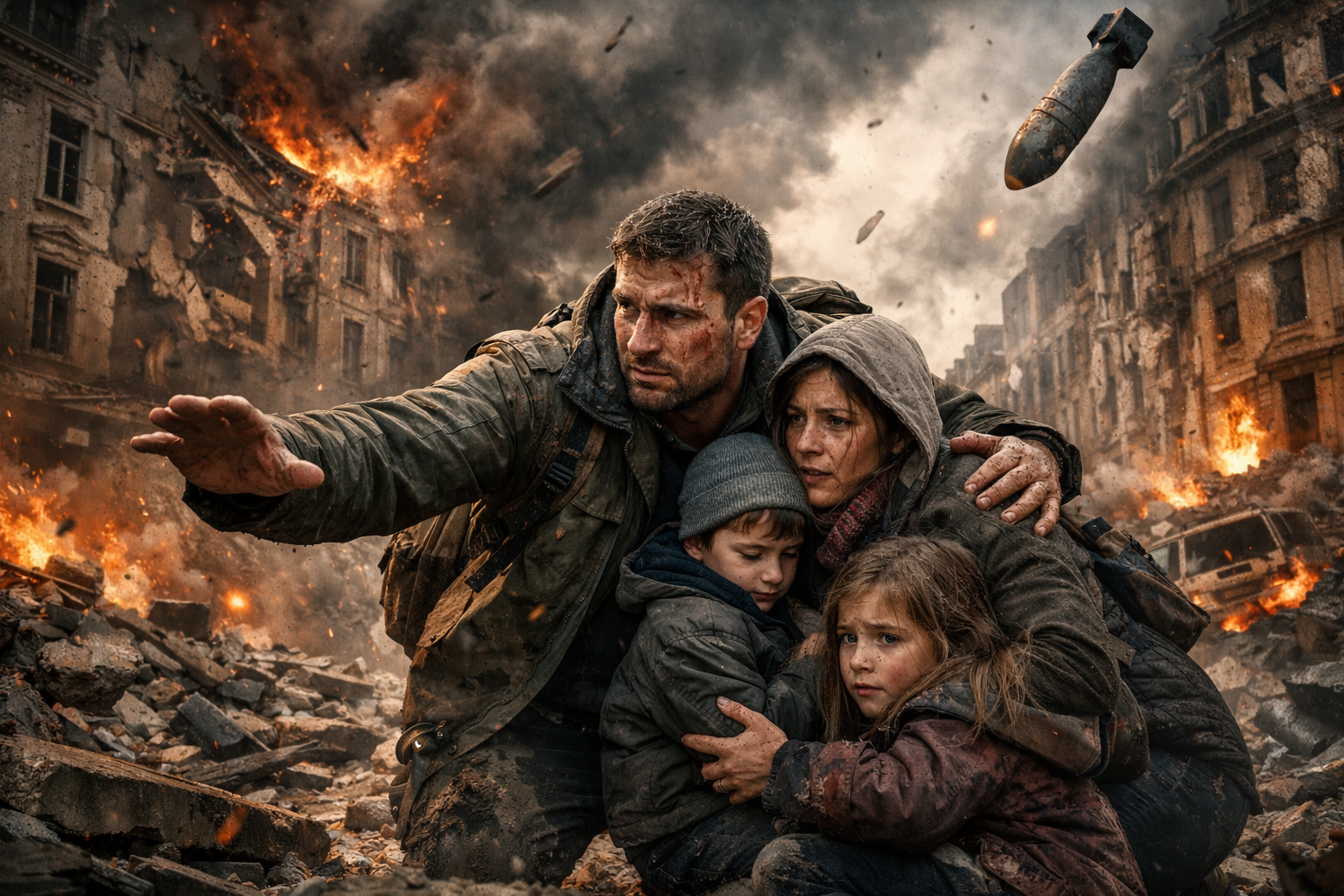
Family Psychology in Crisis: How to Keep Your Household Calm, United, and Functional
A guide to emotional resilience, decision-making, children’s reactions, family roles, and mental stability during emergencies.
In a crisis, family survival depends not only on supplies and plans, but also on psychology. Fear, confusion, conflict, and emotional exhaustion can break decision-making when families need clarity most. This article explains how households can manage stress, support children, reduce panic, and stay united during dangerous or uncertain situations.
Family Psychology in Crisis: Protecting the Home From the Inside
A crisis does not only attack the outside world.
It enters the home through fear, uncertainty, fatigue, arguments, silence, bad news, and the feeling that normal life has disappeared.
Families often prepare food, water, documents, and emergency bags. These are essential. But many forget one of the most important survival systems: the emotional stability of the household.
In a crisis, psychology affects everything.
It affects whether people follow the plan. It affects whether children panic. It affects whether adults argue or cooperate. It affects whether the family leaves too late, reacts too fast, freezes, denies danger, or makes decisions based on fear instead of facts.
Family psychology is not soft. It is operational.
A calm family functions better.
Understand the Normal Reactions to Crisis
Fear is not failure.
During emergencies, people may experience shock, denial, anger, confusion, crying, silence, hyperactivity, or emotional numbness. Some people want to act immediately. Others freeze. Some minimize the danger. Others imagine the worst.
These reactions are normal.
The problem is not emotion itself. The problem is allowing emotion to control decisions.
A prepared family should understand that stress changes behavior. People may speak sharply. Children may become clingy. Teenagers may resist instructions. Adults may struggle to agree.
Recognizing stress reactions helps the family avoid turning fear into conflict.
Create Leadership Without Dictatorship
Every family needs leadership during a crisis.
Leadership does not mean shouting orders. It means creating clarity.
Someone must gather information, decide priorities, assign tasks, and communicate calmly. In some families, one person naturally does this. In others, responsibilities can be shared.
Good crisis leadership sounds like:
“First, we charge the phones.”
“Then we check the route.”
“You prepare the documents.”
“I will fill the water bottles.”
“We will decide in 20 minutes based on verified information.”
Clear direction reduces panic.
But leadership must remain respectful. A family under stress needs structure, not domination.
Give Everyone a Role
Helplessness increases fear.
When family members have roles, they feel useful and more stable.
Adults can manage communication, supplies, documents, transport, pets, first aid, or information. Teenagers can charge devices, download maps, help younger siblings, prepare bags, or monitor official updates. Children can pack small items, keep their shoes ready, stay near an adult, or care for a comfort object.
Roles should be simple and age-appropriate.
The message is:
“You are part of the team.”
This builds cooperation and reduces panic.
Talk to Children Honestly, but Carefully
Children do not need every detail.
They need safety, clarity, and emotional protection.
Avoid saying, “Everything is fine,” if it is clearly not true. Children can sense fear and may lose trust if adults deny reality. Instead, use honest but contained language.
For example:
“There is a serious problem outside, so we are staying home to be safe.”
“The adults are following the plan.”
“You do not need to solve this. Your job is to stay close and listen.”
“We have food, water, and a place to go if needed.”
For young children, keep explanations short. For teenagers, give more information but also clear boundaries. They should not expose themselves to danger, spread rumors, or disappear to check on friends without coordination.
Children feel safer when adults are calm and specific.
Control the News Environment
Constant crisis news can damage family stability.
During emergencies, many people keep phones open all day, refreshing updates, watching videos, reading rumors, and absorbing fear. This creates the illusion of control, but often increases anxiety.
Set information windows.
Check reliable sources at specific times. Avoid graphic videos around children. Do not let every notification interrupt the household. Assign one adult to monitor updates and summarize only what matters.
The goal is not ignorance. The goal is controlled awareness.
A family does not need more panic. It needs usable information.
Prevent Conflict Before It Grows
Crisis creates pressure, and pressure creates conflict.
Arguments often appear around money, evacuation, relatives, children, pets, risk perception, or whether the situation is “really serious.”
The family should agree on decision rules before the crisis escalates.
For example:
- If authorities order evacuation, we leave.
- If communication fails, we meet at location B.
- If one route is blocked, we use route C.
- If one adult is absent, the other follows the plan.
- If the children are scared, we reduce news exposure.
Pre-agreed rules reduce emotional debate.
During a crisis, the family should not need to renegotiate everything from zero.
Maintain Routines Whenever Possible
Routines are psychological anchors.
Even during disruption, small routines help the brain feel that life still has structure.
Try to preserve basic rhythms: meals, hygiene, sleep, prayer or reflection if relevant, school-like activities for children, cleaning, checking supplies, and family updates.
A routine can be simple:
Morning: check information, review plan, breakfast.
Afternoon: charge devices, prepare supplies, quiet activity.
Evening: family briefing, reduce news, sleep preparation.